Research programme

X-ray and Gamma-ray laser-based photon sources

Concurrently with the advancement of long-pulse X-ray sources driven by accelerators, the realm of ultrafast science has experienced significant growth in both breadth and influence over the last four decades. This expansion has been predominantly fueled by remarkable progress in table-top laser technology. A notable aspect of this progression has been the relentless drive towards shorter wavelengths in ultrafast table-top laser capabilities. This pursuit has seen two particularly successful approaches: (i) the utilization of laser-based plasma X-ray sources, which produce incoherent hard X-ray pulses in the femtosecond range through intense laser interactions, typically employing solid-density targets; and (ii) high-order harmonic generation (HHG), which generates coherent XUV pulses spanning femtosecond to attosecond durations via strong-field laser interactions, typically employing gas-phase atomic targets. Furthermore, the integration of advanced femtosecond lasers with conventional synchrotron-based X-ray sources has facilitated the generation of extensively tunable femtosecond X-rays at these facilities through laser manipulation of the relativistic electron beam.

01

The Gamma Factory at CERN
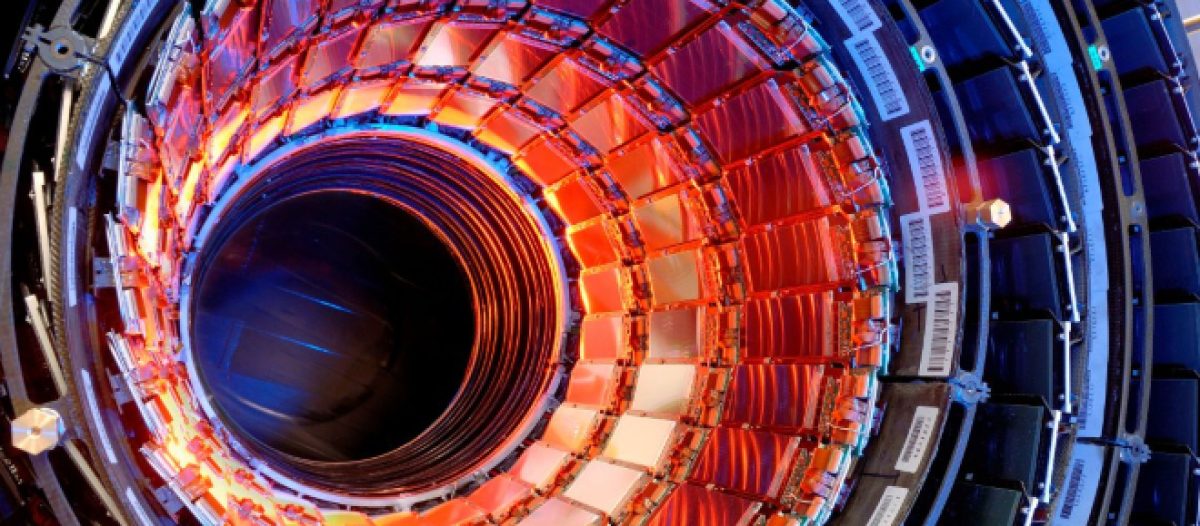
interno-delllhc-il-piu-grande-acceleratore-di-particelle-del-cern_2034613.jpg

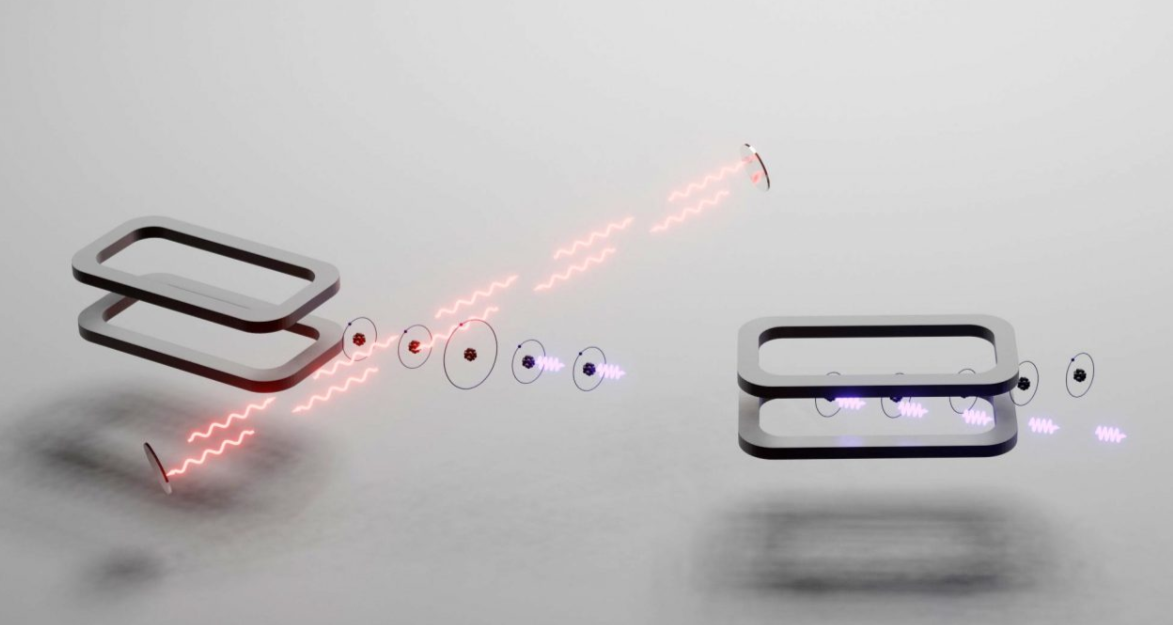
The Gamma Factory project offers the possibility of creating novel research tools by exploiting laser-particle interactions between ultra-relativistic beams of highly ionised atoms in CERN’s accelerator complex and exciting their atomic degrees of freedom by cavity enhanced MW-class average power laser frequency combs. The resulting Gamma-ray beam has an intensity that exceeds by several orders of magnitude the ones offered by the presently operating FEL light sources, in the particularly interesting energy domain from about 100 keV to above 400 MeV.

Representative publications in this area:

  • X.-Y. Lu,R. Chiche, K. Dupraz, F. Johora, A. Martens, D. Nutarelli, Y. Peinaud, V. Soskov, A. Stocchi, F. Zomer, C. Michel, L. Pinard, E. Cormier, J. Lhermite, X. Liu, Q.-L. Tian, L.-X. Yan, W.-H. Huang, C.-X. Tang, V. Fedosseev, E. Granados , and B. Marsh, "Stable 500 kW average power of infrared light in a finesse 35,000 enhancement cavity" App. Phys. Lett. (2024) [ PDF ]PDF
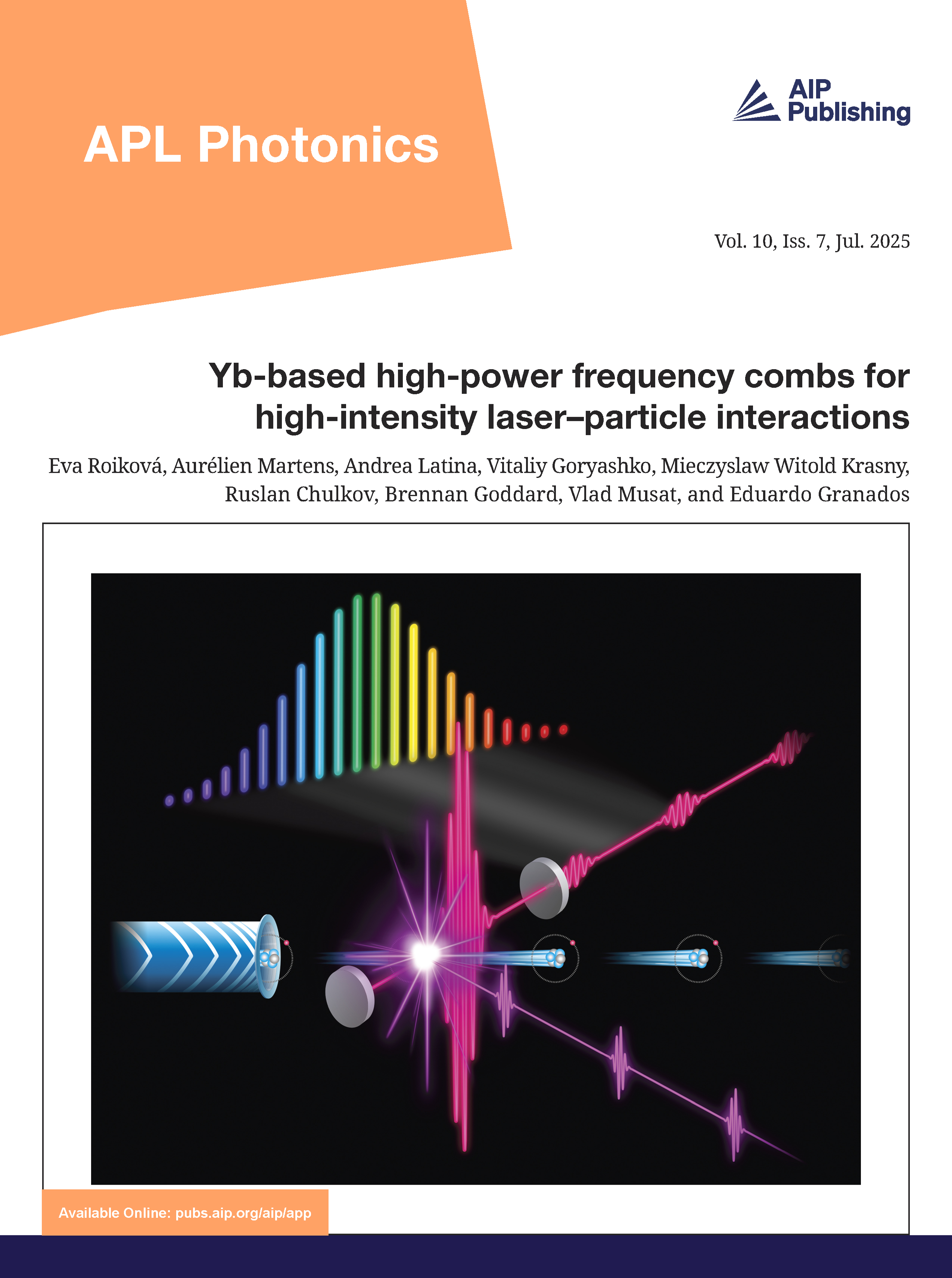
  • E. Roiková, A. Martens, A. Latina, V. Goryashko, M. W. Krasny, R. Chulkov, B. Goddard, V. Musat, E. Granados*, "Yb-based high-power frequency combs for high-intensity laser–particle interactions", APL Photonics, 10, 070901 (2025) [ PDF ]PDF
  • E. Granados* , B. Marsh, Y. Dutheil, G. Arduini, "Laser beam transport and stabilization considerations for the Gamma Factory proof-of-principle experiment," CERN Physics Beyond Collliders 2023-007 (2023) [ PDF ]PDF
02

Inverse Compton Scattering X-ray sources

gamma factory.png

Inverse Compton scattering refers to the phenomenon where low-energy photons are scattered by ultrarelativistic electrons, resulting in the photons gaining energy while the electrons lose energy. Unlike the conventional Compton effect, in this process, it's the electrons that lose energy rather than the photons, hence the term "inverse." Thus, inverse Compton scattering is a means of creating very high energy photons in the X-ray and Gamma ray parts of the spectrum.

In our experiments, a photoinjector generated electron beam pulse train is scattered by a recirculating laser pulse in a novel resonant configuration termed "burst-mode Fabry-Perot enhancement cavities." Our works relies on recent developments related to Electro-Optic frequency combs at GHz repetition rates.

Relevant publications in this area:

  • A. Latina, V. Muşat, R. Corsini, L. A. Dyks, E. Granados , A. Grudiev, S. Stapnes, P. Wang, W. Wuensch, CERN, Geneva, Switzerland E. Cormier, G. Santarelli, "A compact inverse Compton scattering source based on X-band technology and cavity-enhanced high average power ultrafast lasers", FLS2023 (2023) [ PDF ]PDF
  • V. Mușat, A. Latina, E. Granados , E. Cormier, G. Santarelli, "An efficient optimisation of burst mode operated Fabry-Perot cavity for Compton light sources", FLS2023, TU1C1 (2023) [ PDF ]PDF
03

Secondary EUV X-ray sources driven by lasers

app.2025.10.issue-7.largecover.jpeg

Light in the extreme ultraviolet (EUV) region of the electromagnetic spectrum covers the 5-50 nm range. Because its wavelength is 100-10 times shorter than visible light it can ‘see’ and ‘write’ smaller patterns in applications such as microscopy and lithography. Furthermore, these wavelengths are well matched to the primary atomic resonances of most elements, making possible many element- and chemically- specific spectroscopies and spectromicroscopies.

  • Y. Wang, E Granados , F Pedaci, D Alessi, B Luther, M Berrill, JJ Rocca, "Phase-coherent, injection-seeded, table-top soft-X-ray lasers at 18.9 nm and 13.9 nm," Nature Photonics 2 (2), 94-98 (2008) [ PDF ]PDF
  • Y Wang, E Granados , MA Larotonda, M Berrill, BM Luther, D Patel, CS Menoni, JJ Rocca, "High-brightness injection-seeded soft-x-ray-laser amplifier using a solid target", Phys, Rev. Lett. 97 (12), 123901 (2006) [ PDF ]PDF
  • C.-J. Lai, G. Cirmi, K-H. Hong, J. Moses, S.-W. Huang, E. Granados , et al "Wavelength scaling of high harmonic generation close to the multiphoton ionization regime", Phys. Rev. Lett. 111, 7, 073901 (2013) [ PDF ]PDF
04

High power laser development

gamma ray.png

Scaling up the average power and pulse energy of ultra-short-pulse lasers is one of the main topics in laser physics. A variety of approaches are investigated, which can and are being combined in a single system to provide ultra-short high-energy pulses at high repetition rates and average powers. This makes these systems suitable for applications like high harmonic generation (HHG) that require high peak powers to work, while the high repetition rates compensate for the low conversion efficiency.

  • L Zapata, H Lin, A-L Calendron, H Cankaya, M Hemmer, F Reichert, W R Huang, E Granados , K-H Hong, F X Kärtner, "Cryogenic Yb: YAG composite-thin-disk for high energy and average power amplifiers", Opt. Lett. 40, 11 (2015) [ PDF ]PDF
  • S Brown, A Hashim, A Gleason, E Galtier, I Nam, Z Xing, A Fry, A MacKinnon, B Nagler, and E Granados ,"Shock drive capabilities of a 30-Joule laser at the matter in extreme conditions hutch of the Linac Coherent Light Source", Review of Scientific Instruments 8, 1, 105113 (2017) [ PDF ]PDF