Research programme

Diamond Photonics

Diamond has a number of desirable materials properties that make it a promising candidate for on-chip high-performance photonic devices. In particular, its large Raman-gain, wide bandgap, negligible multiphoton loss mechanisms as well as its excellent thermal properties are of interest for the fabrication of active and passive optical devices that are capable of handling high optical powers and the smallest scales.

01

Integrated Fabry-Perot diamond resonators for producing spectrally pure tunable light
Digital art exhibit

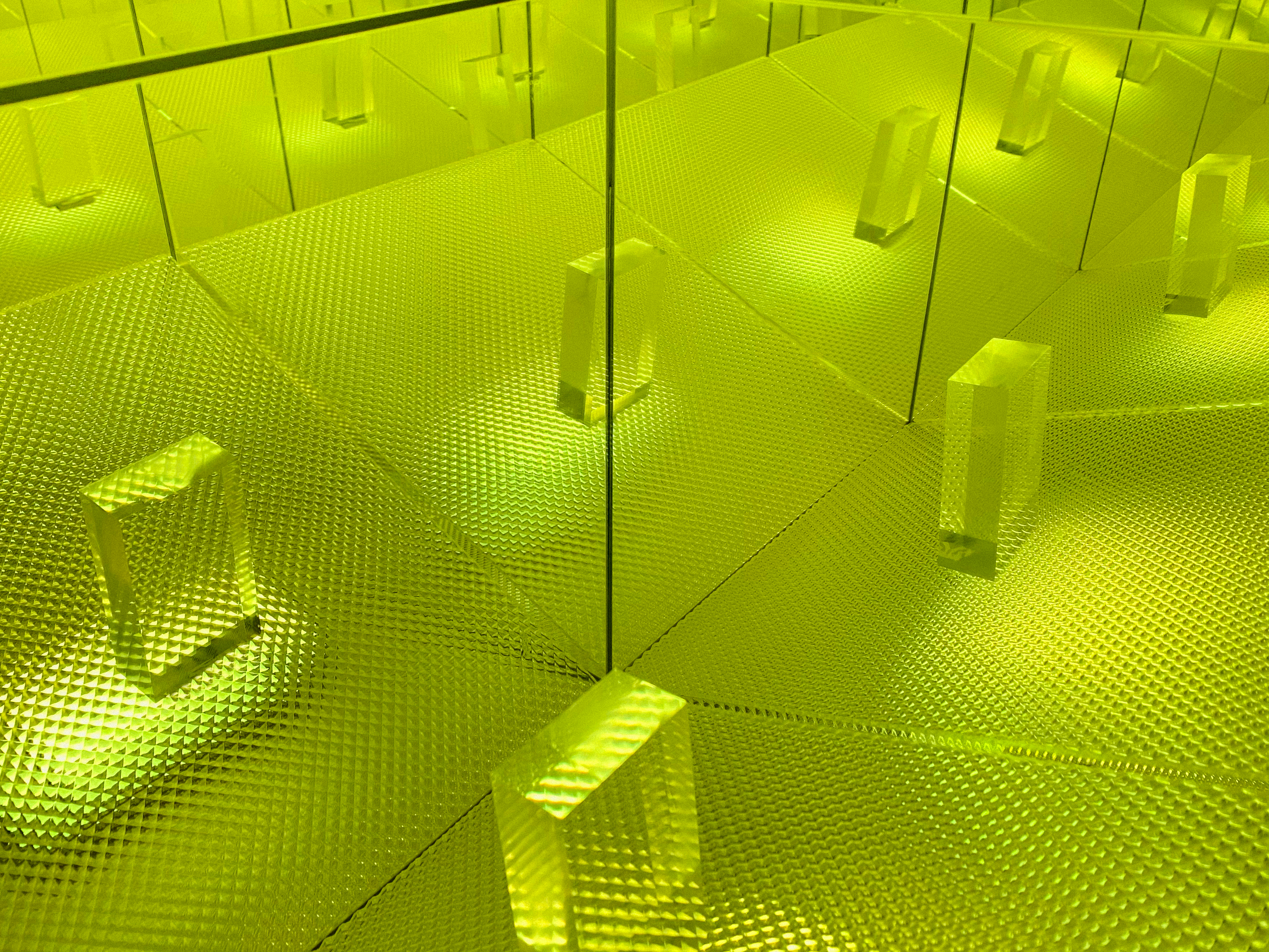
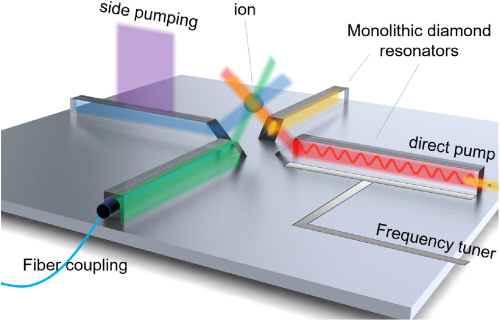
Fourier-limited nanosecond pulses featuring narrow spectral bandwidths are required for applications in spectroscopy, sensing, and quantum optics. Here, we demonstrate a direct and simple route for the generation of single-frequency light relying on phonon-resonant Raman interactions within a monolithic diamond resonator.

Representative publications in this area:

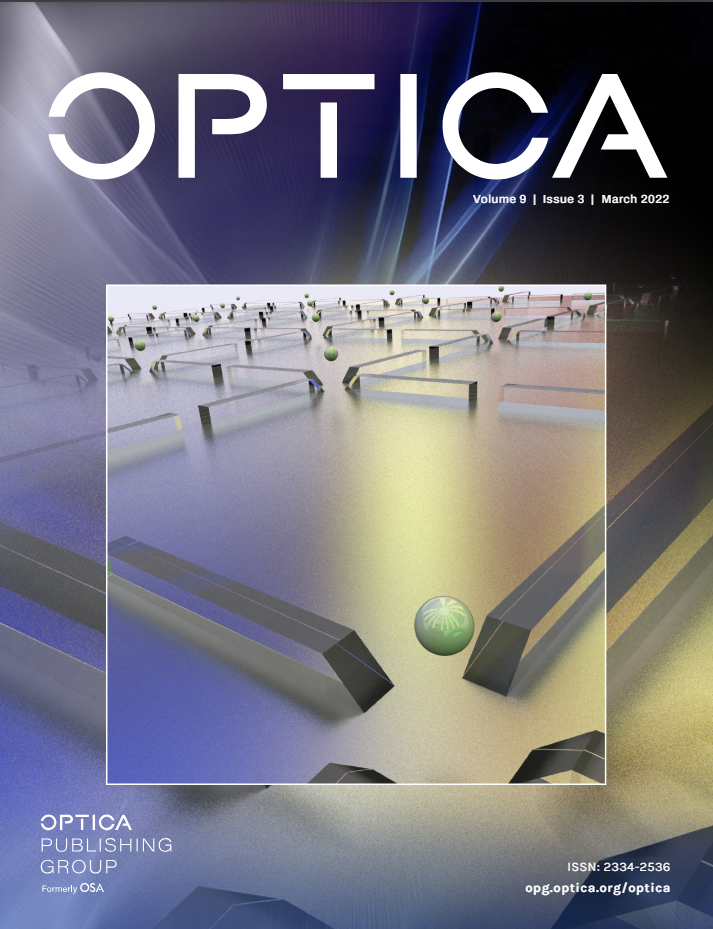
  • E. Granados* et al, "Spectral synthesis of multimode lasers to the Fourier limit in integrated Fabry–Perot diamond resonators," Optica 9, 317-324 (2022) [ PDF ]PDF
  • E. Granados* et al, "Tunable spectral squeezers based on monolithically integrated diamond Raman resonators", Appl. Phys. Lett. 120, 151101 (2022) [ PDF ]PDF
  • E. Granados* and G. Stoikos, "Spectral purification of single-frequency Stokes pulses in doubly resonant integrated diamond resonators," Opt. Lett . Vol. 47, Issue 16, pp. 3976-3979 (2022) [ PDF ]PDF
  • Invited Talk: E. Granados et al "Monolithically integrated widely tunable single-frequency diamond Raman lasers," in Laser Congress 2021 (ASSL,LAC). [ Video ]Video
  • E. Granados , V. N Fedosseev, K. Chrysalidis, R. P. Mildren, "Device, system and method for producing a single longitudinal mode laser output", US Patent App. 18/258,140, 2024 [ PDF ]PDF
02

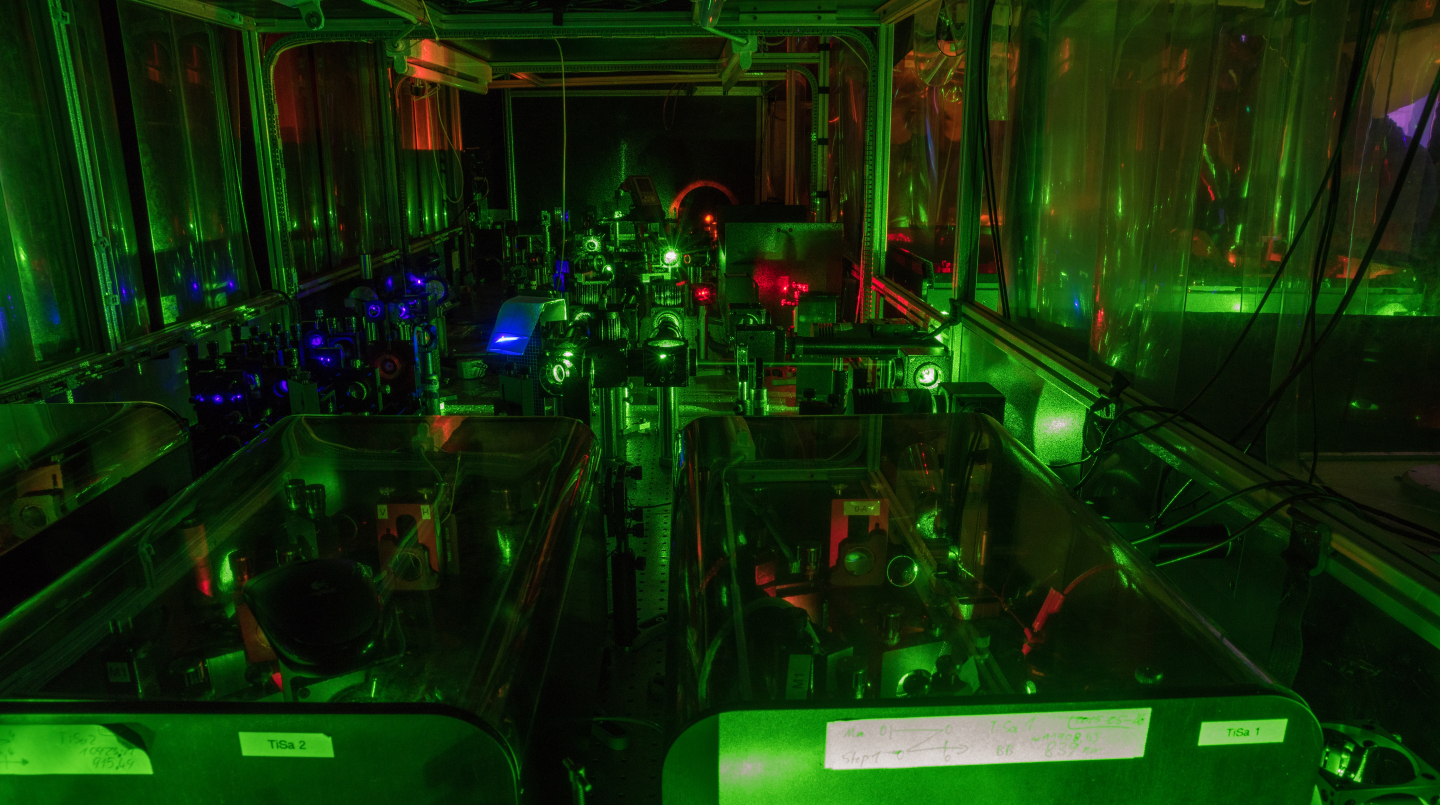
Diamond lasers for resonant ionization spectroscopy

getImage.jpg

Tunable lasers enable the study of electronic structure in atoms and molecules with high precision [ 1 ], granted that the parameters of excitation of light are matched to the quantum transitions in the species under study. In most cases, this implies that it is highly desirable to utilize lasers with emission linewidth matched to the experimental conditions, while maintaining the required wavelength tunability and peak power. For the particular application of resonance ionization spectroscopy (RIS), optimal efficiency requires that the laser linewidth is matched to the Doppler-broadened atomic lines, including fine and hyperfine structure splittings.

1
  • E. Granados* , G. Stoikos, C. Bernerd, K. Chrysalidis, D. T. Echarri, V. N. Fedosseev, R. Heinke, B. A. Marsh, "In‐Source High‐Resolution Spectroscopy Using an Integrated Tunable Raman Laser," Laser & Photonics Reviews 18, 3, 2300564 (2024) [ PDF ]PDF
  • D. T. Echarri, K. Chrysalidis, V. N. Fedosseev, B. A. Marsh, R. P. Mildren, S. M. Olaizola, D. J. Spence, S. G. Wilkins, and E. Granados* , "Broadly tunable linewidth-invariant Raman Stokes comb for selective resonance photoionization," Opt. Express 28, 8589-8600 (2020) [ PDF ]PDF
  • K. Chrysalidis, V. N. Fedosseev, B. A. Marsh, R. P. Mildren, D. J. Spence, K. D. A. Wendt, S. G. Wilkins, and E. Granados* , "Continuously tunable diamond Raman laser for resonance laser ionization," Opt. Lett. 44, 3924-3927 (2019) [ PDF ]PDF
  • D. T. Echarri, R. P. Mildren, S. M. Olaizola, and E. Granados* , "Cascaded Stokes polarization conversion in cubic Raman crystals," Opt. Express 29, 291-304 (2021) [ PDF ]PDF
03

Optical and mechanical properties of diamond

optica_cover.png

Diamond has been fascinating humanity for centuries, both for its rarity and its exceptional physical properties. Due to modern breakthroughs in synthetic diamond production, diamond is now widely available for a variety of scientific applications. The everlasting interest in diamond continues today in step with the development of new applications across different fields of science. As such, diamond holds promise to be one of the premier materials for quantum applications, including quantum computing, generation of single photons, quantum sensing and quantum memories.

  • G. Stoikos and E. Granados* , "Influence of phonon harmonicity on spectrally pure resonant Stokes fields," Phys. Rev A 106, 023504 (2022) [ PDF ]PDF
  • M. J. MacDonald, E. E. McBride, E. Galtier, M. Gauthier, E. Granados , et al , "Using simultaneous x-ray diffraction and velocity interferometry to determine material strength in shock-compressed diamond", Appl. Phys. Lett. 116, 234104 (2020) [ PDF ]PDF
  • L. Weston, J. E. Downes, C. G. Baldwin, E. Granados , S. A. Tawfik, X. Y. Cui, C. Stampfl, and R. P. Mildren, "Photochemical Etching of Carbonyl Groups from a Carbon Matrix: The (001) Diamond Surface", Phys. Rev. Lett. 122, 016802 (2019) [ PDF ]PDF
04

Diamond ultrafast lasers

MA2_2164.jpeg

Diamond has properties that make it highly attractive as a laser material, such as its exceptional thermal conductivity, wide band gap, and lack of firstorder IR absorption bands. Considerable efforts over the past two decades to realize semiconductor lasers, color center lasers, and rare-earth doped lasers based on doped diamond have not yet led to practical devices. The range of performance capabilities envisaged for diamond Raman lasers is essentially untapped, including operation in the transient picosecond regime to generate ultrafast tunable pulses across the optical spectrum.

Relevant publications in this area:

  • D. J. Spence, E. Granados , and R. P. Mildren, "Mode-locked picosecond diamond Raman laser," Opt. Lett. 35, 556-558 (2010) [ PDF ]PDF
  • E. Granados , D. J. Spence, and R. P. Mildren, "Deep ultraviolet diamond Raman laser," Opt. Express 19, 10857-10863 (2011) [ PDF ]PDF